The 'Cortisol-Reset' is going viral among American. Read the clinical breakdown before allocations sell out.

I Slept 8 Hours Every Night and Woke Up Exhausted for Two Years. Then I Found Out Why Melatonin Was Never Going to Fix It.
If you're getting enough hours but still waking up at 3am — still lying there with your brain fully on — the problem isn't your sleep. It's a system your doctor never mentioned. Here's what changed everything.
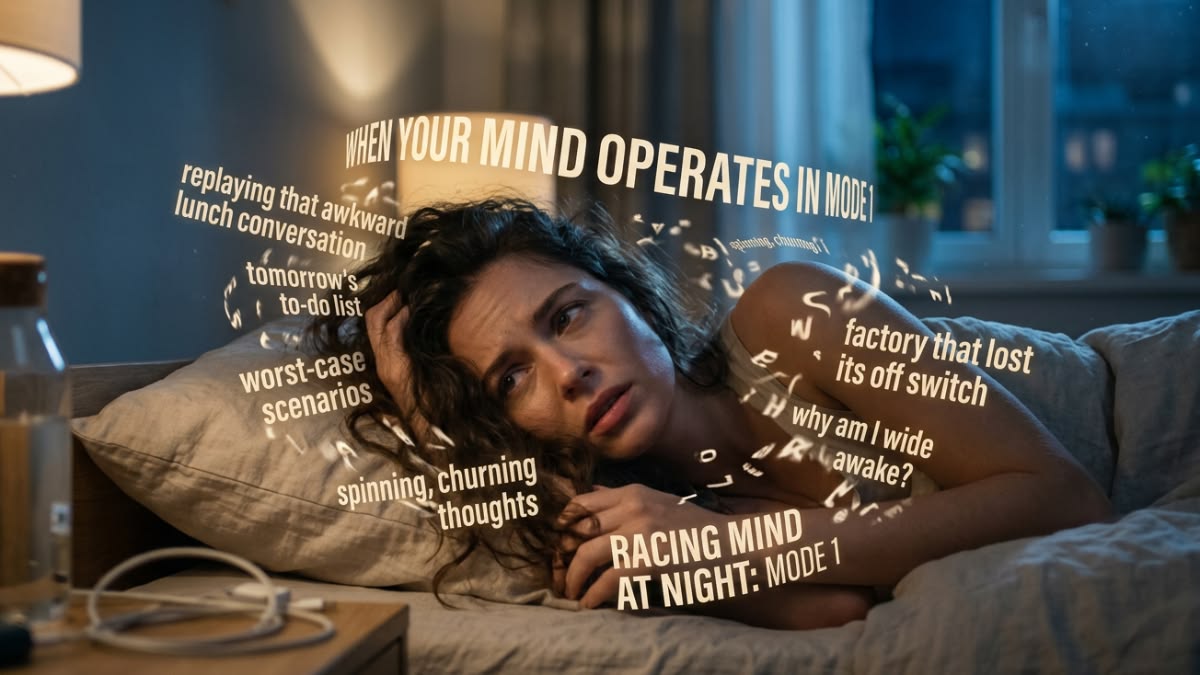
You are not lazy. You are not weak. You are not someone who simply "doesn't prioritize sleep." You get into bed at 10pm. You don't scroll until midnight. You do all the things you're supposed to do. And yet, somewhere between midnight and 6am, your brain refuses to cooperate.
Maybe it takes an hour — sometimes two — just to fall asleep. Your thoughts start the moment your head hits the pillow: the project deadline, the email you forgot to send, the thing you said in a meeting three weeks ago that you're still replaying. The kids' schedule. The conversation you need to have. Tomorrow, tomorrow, tomorrow.
Then around 3am, you jolt awake. Fully. Completely. Heart going just a little too fast. Mind already running. You lie there — exhausted, frustrated — until sometime before your alarm, you fall back into a thin, unrewarding half-sleep that leaves you more tired than if you'd just stayed up.
You get up. You make coffee. You function. And nobody believes you're suffering because you don't look sick. You look like every other slightly tired professional. Normal. Fine.
You are not fine. And you've known that for a long time.
"The worst part isn't the exhaustion. It's that nobody takes it seriously. I sleep 8 hours and wake up feeling like I never closed my eyes — and everyone tells me to just go to bed earlier."
— Katie M., 38 · Marketing Director · Austin, TX · Verified RELAZZ UserYou've watched your professional edge quietly dull. You used to be the sharpest person in the room. Now you over-rely on notes, lose your train of thought mid-sentence, avoid high-stakes situations. A colleague said something last month — gently, but you heard it: "You seem off lately."

At home it's worse. You snap at your kids — not because you want to, but because you're running on four hours of real sleep and your patience has been spent somewhere between 2am and 5am lying in the dark. You cancel on friends. They've stopped inviting you. Your partner feels like a roommate at this point — the one time of day you could connect, you're already mentally rehearsing tomorrow.
You've been to the doctor. Twice. Both times felt dismissed. First: sleep hygiene tips. Second: Ambien. You didn't fill the prescription. You watched your mother take Ambien for twelve years. You know what that looks like at the end. You are not going down that road.
So you kept searching. And you kept trying things. None of them worked — not consistently, not for the 3am problem. And a quiet, shameful thought crept in somewhere along the way: maybe my brain is just broken.
Your brain is not broken. But you have been given the wrong tools — every single time.
What You've Already Tried
The Supplement Graveyard — And Exactly Why None of It Worked
If you've spent any time trying to fix this, you've cycled through at least some version of this list. Here's what each one actually does — and why none of it was ever going to solve your specific problem.
-
✕
Melatonin — 3mg, 5mg, 10mg, every brand "It worked for three months. Then stopped completely. I kept increasing the dose. Grogginess got worse. Sleep didn't improve." Melatonin is a circadian signal — it tells your body it's nighttime. It does not address what chronic stress has done to your brain's braking system. And once your body detects the external supply, it reduces its own production. You build tolerance. Then you're worse off than when you started, afraid you've damaged your own hormones.
-
✕
Magnesium glycinate (the "good kind") "It takes the edge off. I feel slightly more relaxed. I still wake up at 3am." Magnesium supports muscle relaxation and helps with general tension. It does not touch the specific neuroreceptor system that chronic professional stress depletes. The 3am wake-up is not a magnesium problem.
-
✕
The Sleepy Girl Mocktail (tart cherry, magnesium, prebiotic soda) "Inconsistent. Worked twice. Then nothing. I can't build a routine around something that might work." Tart cherry has weak melatonin-adjacent properties. Magnesium is helpful but limited. The combination is pleasant — not therapeutic for a depleted nervous system.
-
✕
Calm, Headspace — 12 days in a row before life happened "Lying there focusing on my breathing just gives my brain more time to spiral. Telling a stressed brain to 'breathe in for 4, out for 7' is like telling someone on a roller coaster to just relax." Mindfulness is genuinely valuable over time. It cannot override a nervous system in emergency mode at the neurochemical level at 11pm.
-
✕
Full sleep hygiene overhaul — consistent schedule, no screens, cooler room "I did everything by the book for a month. It helped marginally. The rigidity added anxiety when I inevitably broke the routine traveling for work." Sleep hygiene addresses behavioral inputs. Your problem is neurochemical. You cannot behavioral-hack your way out of a depleted GABA system.
Look at that list. Every item targets either sleep timing (melatonin), general relaxation (magnesium), or behavior patterns (apps, hygiene). Not one of them addresses what years of sustained professional stress has actually done to the specific receptor system in your brain responsible for turning it off.

The Real Problem
What Chronic Stress Actually Does to Your Brain — And Why Nobody Told You
Here's the biology nobody explained to you at the doctor's office. Not because it's complicated — but because it doesn't fit neatly into a 15-minute appointment, and because the supplement industry makes more money selling you melatonin than explaining why it won't work for you.
Your Brain Has a Natural Off Switch. Chronic Stress Breaks It.
GABA — gamma-aminobutyric acid — is your brain's primary inhibitory neurotransmitter. It is the chemical signal that tells your nervous system to stand down. To stop scanning for threats. To let you actually rest.
When your GABA system is functioning properly, you can lie down, feel the day release, and drift off. Your thoughts quiet — not because you're sedated, but because your brain's braking system is working the way it was designed to.
Here's what changes under chronic professional stress: the GABA-A receptors in your brain — the receptors that respond to GABA — become desensitized over time. Sustained cortisol exposure gradually reduces their sensitivity. This is the neurological equivalent of a volume dial that used to go from 10 down to 0 — but now can only get to 6. No matter how tired you are. No matter how good your sleep hygiene is. The dial won't go lower.
You're exhausted. Your body wants to sleep. Your brain's off switch doesn't work. So you lie there. You fall into shallow sleep. Something wakes you at 3am — and your already-depleted GABA system can't pull you back down.
This is not a sleep disorder. This is GABA-A receptor desensitization. And melatonin, magnesium, chamomile tea, and sleep hygiene do not touch it.
This is why you can do everything right — 10pm bedtime, no screens, cool room, consistent schedule — and still spend an hour staring at the ceiling. The behavioral inputs are correct. The neurochemical infrastructure is compromised. You were fixing the wrong thing, every single time.
So what actually fixes GABA-A receptor desensitization? For 15 years, the answer sat in a French laboratory that most American brands have never heard of.
The Discovery
The French Peptide That's Been Restoring Sleep for 20 Years — While America Kept Selling Melatonin
In the 1990s, researchers at a French biotech company observed something curious: infants fed warm milk before bed consistently fell asleep faster and stayed asleep longer. The effect was too consistent to be behavioral. They isolated the active compound.
What they found was a bioactive decapeptide — a short chain of amino acids found in milk protein — that demonstrated a direct effect on GABA-A receptor activity. Specifically, it restored receptor sensitivity without sedating the user. It did not force sleep. It restored the brain's ability to naturally reach it.
After 15 years of clinical research and 300+ peer-reviewed studies, the ingredient was commercialized under the name Lactium®.
It received GRAS (Generally Recognized As Safe) recognition from the FDA. It is Non-GMO and Kosher certified. It won the Bronze Medal at Health Ingredients Europe for Best Innovation in Health Ingredients. It became widely used in European and Asian sleep formulations.
And the American supplement market kept selling you 10mg melatonin gummies.
The Formula
Five Ingredients. Two Continents. One Specific Problem.
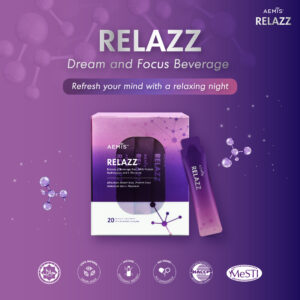
AEMIS RELAZZ is the first US-facing sleep product to bring Lactium® into a ready-to-drink sachet format — paired with four additional clinically supported ingredients that work on the same cortisol-GABA pathway. Here's what's inside, and why each element earns its place.
The core mechanism. Contains bioactive decapeptide IPH that directly increases GABA-A receptor activity — the same receptor pathway used by benzodiazepines, but without sedation, dependency, or tolerance. Sourced from Holstein Friesian cows milked only at night, when their own melatonin is highest. FDA GRAS certified. No known drug interactions. Safe for lactose intolerant users.
FDA GRAS · Non-GMO · Kosher · No DependencyJapanese-patented fermented rice germ extract produced via proprietary enzyme activation. Acts as a direct GABA precursor that activates blood flow and increases oxygen supply to brain cells. Clinically shown to reduce insomnia symptoms and stabilize neurotransmitter balance. Works synergistically with Lactium® on the same receptor pathway.
Clinically Validated · Patented ProcessOne of the most extensively documented herbs in TCM — used specifically for overworked mind, anxiety-driven restlessness, night sweats, and sleep maintenance. Contains compounds with clinically documented sedative and hypnotic properties that address the stress-driven insomnia profile directly. Addresses exactly the 3am wake-up pattern.
2,300+ Year Heritage · Documented MechanismContains humulone and lupulone — active compounds with documented mild sedative effects used across European traditional medicine for over 1,200 years. Works synergistically with Lactium® for deeper GABA pathway activation, supporting both sleep onset and sleep maintenance without residual morning effects.
Synergistic GABA ActivationPromotes alpha brain-wave activity — the state of relaxed alertness that is the neurological precondition for natural sleep onset. Multiple studies show L-theanine reduces resting heart rate, eases pre-sleep racing thoughts, improves sleep quality scores, and even enhances next-day cognitive performance. No dependency. No grogginess. Familiar to wellness-aware consumers from green tea.
No Dependency · Improves Next-Day ClarityRELAZZ contains no melatonin — not as an omission, but as a deliberate positioning. Every ingredient targets the cortisol-GABA pathway: the root cause of stress-driven sleep disruption. No hormone supplementation means no tolerance, no circadian disruption, no fear of what you've done to your own chemistry after 3 months.
No Melatonin · No Tolerance · No Grogginess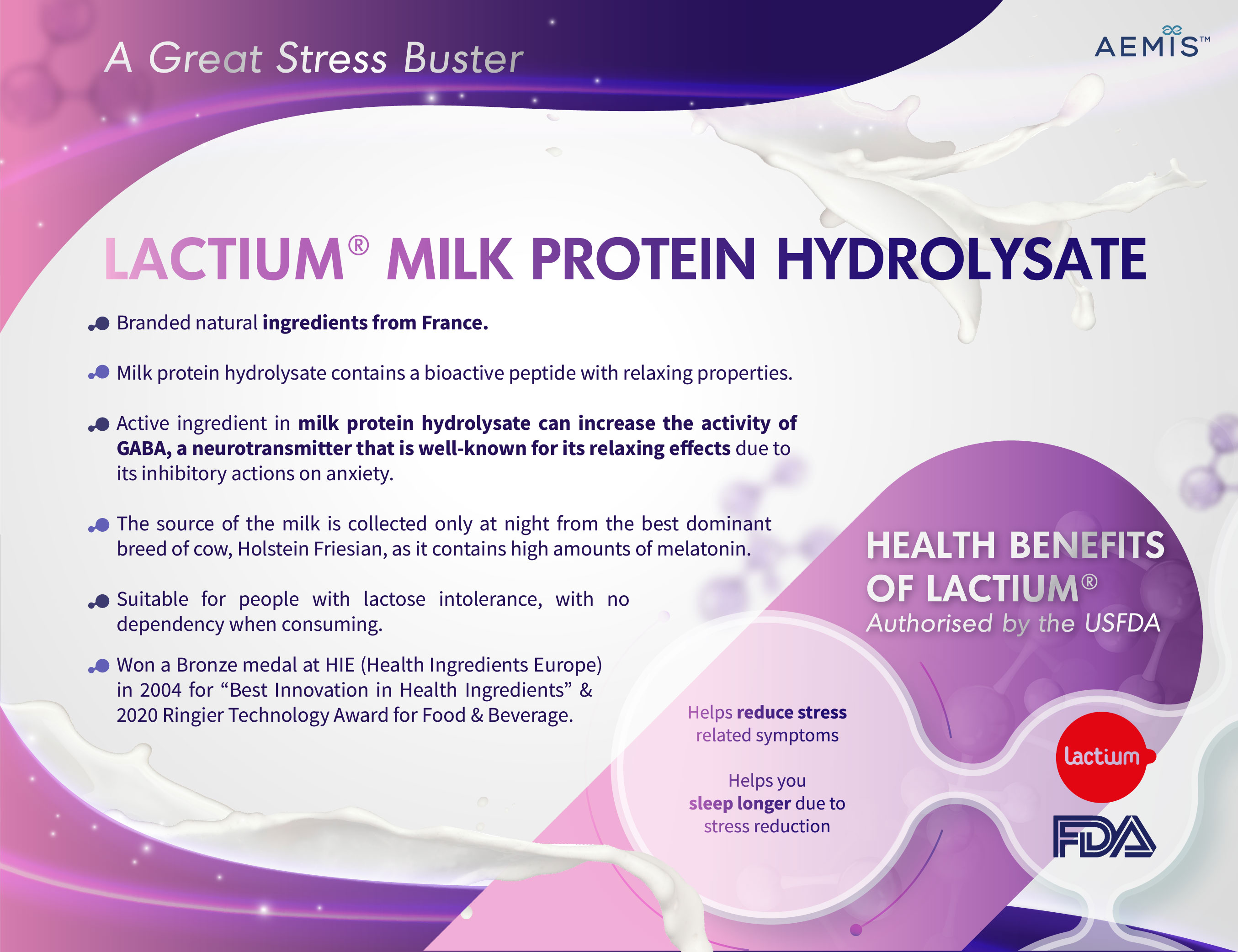

Why It's Different
RELAZZ vs. Everything You've Tried — The Honest Comparison
This is not a subtle difference in ingredient quality. This is a fundamentally different mechanism addressing a fundamentally different problem. The table below shows why nothing in your supplement graveyard was ever going to work for the 3am wake-up problem — and why RELAZZ operates in a different category entirely.
| What it does | RELAZZ (Lactium®) | Melatonin | Magnesium | Prescription Ambien |
|---|---|---|---|---|
| Mechanism | Restores GABA-A receptor sensitivity | Circadian clock signal | General muscle relaxation | CNS sedation (depressant) |
| Stops racing thoughts at night | ✓ Yes — directly | ✗ No | ✗ Partial | ✓ Yes (via sedation) |
| Stops 3am wake-ups | ✓ Yes | ✗ No | ✗ Rarely | ✓ Yes (sedation) |
| Builds tolerance over time | ✓ Never recorded | ✗ Yes — 3 to 6 months | ✓ Generally not | ✗ Yes — rapidly |
| Morning grogginess | ✓ None in all studies | ✗ Common at 5–10mg doses | ✓ Usually not | ✗ Significant hangover |
| Dependency risk | ✓ Zero recorded | ✗ Psychological dependence | ✓ None | ✗ High — can be severe |
| Format | Liquid sachet — 3 seconds | Pill / gummy | Powder / capsule | Pill (prescription only) |
What Changes
The Morning You've Forgotten Is Still Possible
You've been exhausted for so long that you've started to believe this is just who you are now. The tired version. The slightly-less version. The version that functions but doesn't really live.
That version of you is not permanent. She is a symptom.
She tears open a sachet at 9:30pm. Three seconds. She sips it and doesn't really think about it. She reads for twenty minutes. The thoughts are there — but quieter. The volume has been turned down.
She is asleep by 10:20. Not sedated-asleep. Just asleep. The way sleep used to work before the years of cortisol wore something down in her.
She does not wake up at 3am. Her alarm goes off at 6:15. She opens her eyes — actually opens them, not peels them open. Her first thought is about breakfast, not the project.
She makes coffee. Her daughter comes downstairs. She laughs — actually laughs — at something small and inconsequential. Not because something is funny, but because she has the capacity to find things funny again.
Two weeks in, a colleague says unprompted: "You seem like yourself today. Like, actually yourself." She realizes she hasn't felt like herself in about two years. Not since the promotion. Not since the mortgage. Not since everything got heavy.
This is what you're actually buying. Not a supplement. The version of yourself that's been waiting on the other side of real sleep.

From People Like You
What Happens When You Finally Target the Right System
"I fall asleep within 15 minutes now. I just do a little reading in bed and I fall asleep with the book on my chest. I've been on this for six weeks. Took melatonin for four years. I can't believe this is what was missing — the mechanism actually makes sense once you understand it."
"My Oura Ring score was averaging 64 before RELAZZ. After three weeks it's 82. Deep sleep went from 38 minutes to 1 hour 26 minutes. I track everything. The data doesn't lie. And my deep sleep data had never moved from anything I'd tried before — not magnesium, not L-theanine, not Beam Dream."
"My 9-year-old said 'Mom, you're fun again' on a Tuesday morning getting ready for school. She said it offhandedly. She didn't know it would make me cry in the car on the way to work. That was week three. I hadn't realized how much of myself had quietly disappeared."
"I had essentially accepted that this was just who I was now. Tired. Slightly less sharp than I used to be. Running on cortisol and coffee. Three weeks of RELAZZ and a colleague said 'you seem like yourself today.' That sentence hit me harder than it should have. I genuinely hadn't felt like myself in two years."
Your Questions, Answered
The Questions You're Asking Right Now
The Decision
You're Not Broken. You've Just Been Targeting the Wrong System.
You haven't given up. If you had, you wouldn't be here. That carefully guarded flame — the 30 seconds of "what if this one is different" — is still burning. That is not irrational hope. That is a correct read of the situation.
There is a real reason nothing has worked. And now you know what it is.
You have tried everything that addresses the symptoms of a depleted nervous system. This is the first formula specifically designed to address the cause. The GABA-A receptor desensitization of someone who has been carrying too much, for too long, without the neurochemical support to come down at the end of the day.
The mechanism your doctor couldn't give you. The thing that was missing from every supplement you've placed on your nightstand. The reason your brain wouldn't turn off — not because something is wrong with you, but because the system responsible for turning it off had been worn down by years of sustained professional demand.
Taking care of your nervous system is not weakness. It is the decision of someone who understands that you cannot perform, parent, or show up for the people who need you from a state of chronic depletion. The professionals who stay sharp — the ones who keep their edge — are the ones who learned to repair, not just endure.
Try it for 30 nights. Wake up and decide then.